
Key takeaways
- Agricultural drones boost farm efficiency by up to 40% – Drones enable precision spraying, mapping, and crop monitoring, helping Australian farmers cut fertiliser use by up to 18% and improve water efficiency by 22% (CSIRO, 2024).
- Choose the right drone for your needs – Entry-level drones start at $2,000, mid-range options range between $10,000–25,000, and advanced spraying or mapping drones can exceed $50,000. Select based on farm size, crop type, and operational priorities.
- Software drives ROI – Advanced drone software supports real-time crop analysis, yield prediction, and irrigation planning. Australian farms using precision mapping have reported 30% faster field assessments compared to manual inspections.
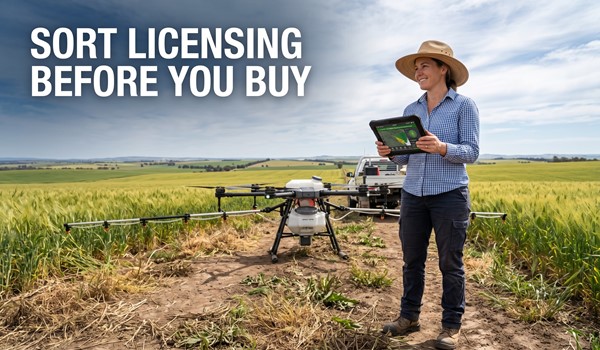
- Compliance is mandatory in Australia – To operate drones commercially, you’ll need a Remote Pilot Licence (RePL) and possibly a Remote Operator’s Certificate (ReOC) under CASA regulations. Operating outside these rules risks fines and insurance issues.
- Integrate drones seamlessly into operations – Maximise ROI by aligning drone workflows with spraying schedules, irrigation plans, and staff training. Create a clear integration strategy to avoid underuse and wasted investment.
- Leverage financing and grants – Flexible options like leasing, asset finance, and government grants make adopting drone technology more accessible for Australian farmers.
- Real-world results prove the value – From a Queensland sugarcane farm saving 22% water to a NSW wheat operation cutting fertiliser use by 18%, drones deliver measurable gains across different farming sectors.
- Regular maintenance protects your investment – Follow best practices like pre-flight checks, software updates, and battery care to extend drone lifespan to 3–5 years and reduce downtime
Introduction
Agricultural drones have revolutionised farming in Australia, offering solutions that enhance efficiency, reduce costs, and improve crop management. From precision spraying to crop monitoring, these unmanned aerial vehicles (UAVs) are becoming indispensable tools for modern farmers. This guide provides a comprehensive overview of agricultural drones, focusing on key considerations for Australian farmers looking to invest in this technology.


Compare quotes from expert Australian suppliers and make the best choice. It's free, quick and easy!
Types of agricultural drones
1. Spraying drones
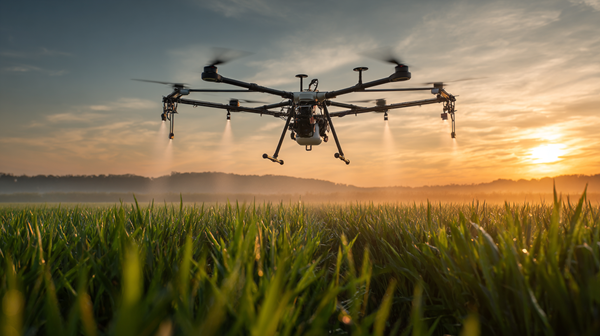
- Purpose: Designed for applying pesticides, fertilisers, and herbicides.
- Features:
- Large payload capacity (up to 72L).
- High-efficiency nozzles for uniform distribution.
- GPS and RTK systems for precise application.
2. Mapping and surveying drones
- Purpose: Used for creating detailed maps and 3D models of farmland.
- Features:
- High-resolution cameras and multispectral sensors.
- Long flight times for extensive coverage.
- Integration with Geographic Information Systems (GIS).
3. Livestock monitoring drones
- Purpose: Monitor and manage livestock across large properties.
- Features:
- Thermal imaging for night-time monitoring.
- Automated flight paths for routine checks.
- Integration with livestock management software.
Pricing overview
Agricultural drone prices in Australia vary significantly based on their capabilities, payload capacity, software features, and intended use. Choosing the right model depends on your farm size, crop type, and operational requirements.
Entry-level drones (~$2,000–$5,000)
Best for small-scale farms or hobby farmers looking to trial drone technology.
- Typical features: Basic mapping, visual crop health monitoring, and lightweight cameras.
- Limitations: Lower payload capacity, shorter flight times, and limited automation.
Mid-range drones (~$10,000–$25,000)
Ideal for medium-sized farms requiring higher efficiency and semi-automated operations.
- Typical features: Multispectral imaging, better flight endurance, and precision spraying.
- Benefits: Reduced labour costs, optimised fertiliser application, and improved yield tracking.
High-end drones (~$50,000+)
Designed for large-scale commercial farms and advanced analytics.
- Typical features: High-capacity spraying systems, AI-driven crop analysis, and integration with precision agriculture software.
- Benefits: Scalable operations, minimal human intervention, and maximised ROI.
Operations and maintenance
Understanding how agricultural drones operate and maintaining them correctly is essential for maximising efficiency, extending lifespan, and ensuring safety.
Operational considerations
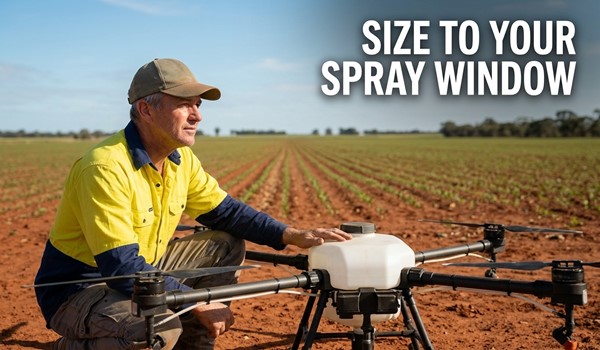
- Flight time: Most agricultural drones operate for 20–30 minutes per battery cycle, but advanced models offer up to 60 minutes.
- Coverage area: Mid-range spraying drones cover up to 10 hectares/hour, while high-end drones can reach 30 hectares/hour.
- Payload capacity: Entry-level drones carry around 5–10 litres, whereas advanced spraying drones handle 40 litres+.
- Weather tolerance: Most drones function effectively in winds up to 10 m/s, but check manufacturer specs for rain and dust resistance (look for IP54 or IP67 ratings).
- Software integration: Use drone mapping and analytics platforms like Pix4D, DroneDeploy, or DJI Terra to monitor crop health, detect irrigation issues, and optimise spraying schedules.
Maintenance tips
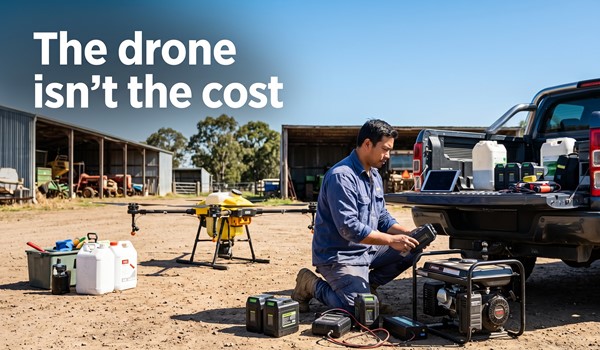
Regular maintenance ensures consistent performance, lower repair costs, and longer drone lifespan:
- Regular inspections: Before each flight, check propellers, motors, cameras, and sensors for wear and tear.
- Software updates: Keep firmware, mapping, and AI-driven crop analysis tools up to date to improve accuracy and compliance.
- Battery care: Store batteries in a cool, dry environment at around 40–60% charge; avoid overcharging to maintain lifespan.
- Cleaning protocol: After each operation, remove dust, pesticide residue, and debris from propellers, cameras, and nozzles.
- Calibration: Calibrate GPS, IMU, and spraying systems regularly to maintain mapping accuracy.
Financing and warranties
Investing in agricultural drones can be a significant cost, but flexible financing options and manufacturer warranties make adoption easier.
Financing options
- Leasing: Access drones with low upfront costs and optional upgrades every few years. Ideal for small farms testing drone technology.
- Asset finance: Use the drone as collateral to spread repayments over 2–5 years, keeping cash flow stable.
- Operating leases: Pay only for usage while avoiding ownership risks — perfect for fast-evolving drone models.
- Government grants: Australian farmers may access federal and state grants like the On-Farm Connectivity Program (up to $30,000) or R&D tax offsets for ag-tech adoption.
Warranty considerations
- Standard coverage: Most manufacturers offer 12–24 months warranty, covering manufacturing faults.
- Exclusions: Accidental crashes, misuse, and third-party modifications are usually not covered.
- Extended warranties: Optional add-ons provide coverage for hardware repairs, software issues, and flight accidents.
- Service plans: Brands like DJI Care Enterprise offer priority repairs and rapid replacements, reducing downtime.
Compare quotes from expert Australian suppliers and make the best choice. It's free, quick and easy!
Compliance and certification in Australia
Operating agricultural drones in Australia requires compliance with Civil Aviation Safety Authority (CASA) regulations. Non-compliance can lead to fines exceeding $15,650 and invalidate insurance coverage.
Licensing requirements
- Remote Pilot Licence (RePL): Mandatory for individuals using drones over 2 kg for commercial purposes.
- Remote Operator’s Certificate (ReOC): Required for businesses managing multiple drones or conducting complex operations.
- Excluded category operations: Drones under 2 kg used commercially don’t require licensing but must still follow CASA rules.
Operational limitations
- Altitude restriction: Drones cannot fly above 120 metres (400 ft) without special CASA approval.
- Visual line of sight (VLOS): You must maintain direct visual contact with the drone at all times.
- No-fly zones: Avoid operating within 5.5 km of airports, emergency operations, or heavily populated areas unless approved.
- Night operations: Permitted only with proper training and CASA authorisation.
Training and certification programs
CASA-recognised training providers, such as Australian Unmanned Systems Academy (AUSA) and Aviation Australia, offer courses combining theory, practical flying, and compliance training.
Drone software and data analytics
While the drone hardware is important, the real value often comes from the software that interprets the data it collects. Agricultural drones today are more than flying cameras, they’re precision tools for crop management.
Key functionalities to consider:
- Mapping and surveying: Generate accurate field maps using GPS-enabled drones to identify crop health variations, irrigation issues, or soil inconsistencies. Australian farms using drone mapping have reported up to 30% faster field assessments compared to manual inspections (source: CSIRO, 2024).
- Crop analysis: Multispectral and hyperspectral imaging software detects plant stress, nutrient deficiencies, and pest infestations earlier than the naked eye. This early detection can reduce input costs by up to 15–20%.
- Yield prediction and planning: Advanced analytics allow you to forecast crop yields based on historical data, weather patterns, and real-time drone imagery. This improves decision-making for harvest timing, storage, and sales.
- Integration with farm management systems: Choose software that can export data directly into farm management platforms, such as irrigation controllers or fertilisation scheduling tools, for seamless workflow.
Actionable tip: Evaluate software not just for features, but also for ease of use, mobile access, cloud storage, and compatibility with existing farm technology. Licences can range from $500 to $5,000 per year depending on sophistication.
Case studies and real-world applications
Seeing agricultural drones in action provides context for their ROI and practicality. Australian farms across regions are successfully using drones to boost productivity and efficiency.
Example 1: NSW broadacre wheat farm
- Implemented drones with multispectral sensors to monitor over 2,000 hectares.
- Early detection of nutrient deficiencies reduced fertiliser use by 18%.
- Labour hours spent on crop scouting dropped by 40%, freeing up staff for other tasks.
Example 2: Queensland sugarcane plantation
- Used drones for irrigation mapping and soil moisture analysis.
- Adjusted irrigation scheduling improved water efficiency by 22%, lowering operational costs.
- Real-time imagery allowed managers to identify pest infestations early, reducing chemical use.
Example 3: Victorian horticulture operation
- Implemented drones for canopy analysis in vineyards.
- Improved grape quality uniformity through targeted interventions, increasing harvest yield value by 10%.
Actionable tip: When evaluating drones, ask suppliers for local case studies. These examples provide insight into realistic performance, costs, and potential ROI for Australian conditions.
Integration with existing farm operations
Buying a drone is only one step; ensuring it fits seamlessly into your current farm workflow determines its real value. Poor integration can lead to underused technology and wasted investment.
Key considerations:
- Workflow compatibility: Map out current farm operations, including planting, spraying, irrigation, and monitoring routines. Identify where drone technology can replace or enhance existing processes.
- Staff training: Ensure staff are trained not only to operate drones safely but also to interpret the data for actionable insights. Many Australian suppliers offer in-field training programs.
- Scheduling and deployment: Factor in seasonal demands, weather windows, and drone battery life. Some operations may require multiple drones or staggered flight schedules to maintain coverage without disrupting other tasks.
- Maintenance alignment: Integrate drone maintenance with existing machinery servicing schedules to reduce downtime. Keeping spare parts and batteries on-hand is crucial.
Actionable tip: Create a farm integration plan detailing operational points where drones add value, who is responsible for data interpretation, and how insights feed into decision-making. This ensures technology adoption translates into measurable improvements
Common questions from agricultural drone buyers
1. Do i need a licence to operate a drone commercially in Australia?
Yes, a Remote Pilot Licence (RePL) is required for commercial drone operations in Australia.
2. What is the lifespan of an agricultural drone?
With proper maintenance, agricultural drones can last between 3 to 5 years.
3. Can drones be used for livestock management?
Yes, drones equipped with thermal imaging can monitor livestock, even in low-light conditions.
4. Are there any government incentives for purchasing agricultural drones?
Some Australian government programs offer grants and incentives for adopting agricultural technology.
5. How do i choose the right drone for my farm?
Consider factors such as farm size, type of crops, and specific tasks (e.g., spraying, mapping) when selecting a drone.
Conclusion
Investing in an agricultural drone can significantly enhance the efficiency and productivity of your farming operations. By understanding the types of drones available, their costs, operational requirements, and compliance obligations, you can make an informed decision that aligns with your farm's needs. With the right drone technology, Australian farmers can achieve better crop management, reduced costs, and improved yields.