In short:
Truck Finance – Compare Options and Secure the Right Loan with EasyAsset
Key facts
- What it does: Spreads the cost of a truck over 3 to 7 years so it earns revenue from day one instead of tying up your working capital.
- Most common structure: A chattel mortgage, where you own the truck from settlement and the lender holds security until it is repaid.
- Rate range: Truck finance rates in 2026 commonly run from around 7.49% p.a. for strong borrowers up to about 15% p.a., depending on profile and asset.
- New vs used: Most lenders finance used trucks up to roughly 15 years old at term end; older or specialised trucks attract higher rates.
- Speed matters: A prime mover can earn serious revenue per week, so slow approval costs money. Specialist lenders and pre-approval keep you moving.
Why financing beats paying cash for a truck
A truck is a working asset, not a trophy. Whether you are an owner-driver buying your first prime mover or a fleet operator adding capacity, the smart play is usually to let the truck generate income while you pay it off, rather than draining cash you need for fuel, maintenance and wages. Asset finance lets you do exactly that, spreading the cost over the truck's working life.
The market is active. The average truck loan in Australia in 2026 sits around $115,000, according to Money.com.au, with almost two-thirds of applicants buying used. Transport operators are also under real cost pressure, with diesel prices climbing through 2026, which makes preserving working capital more important, not less.
Most truck operators choose a chattel mortgage because they want to own the asset and claim the tax benefits that come with ownership. The job is to match the structure, term and lender to your truck and your cash flow.
The main finance structures
There is no single right answer; it depends on your tax position and whether you want ownership. The table below sets out the main options:
| Structure | Who owns it | Best for |
|---|---|---|
| Chattel mortgage | You, from day one | Owner-operators wanting ownership and tax claims |
| Commercial hire purchase | Lender, until final payment | Ownership at term end with similar deductions |
| Finance lease | Lender, you lease | Fully deductible payments, option to buy at end |
| Operating lease | Lender, you return it | Fixed-cycle upgrades without disposal risk |
Choose a chattel mortgage when you want to own the truck from settlement and claim GST, depreciation and interest. It is the most popular structure for owner-operators and is closely related to broader truck finance options worth comparing.
Choose a lease when you prefer fully deductible payments, want the truck off your balance sheet, or run a fixed replacement cycle. Note that prime mover and trailer are often financed as two assets, so a separate trailer finance arrangement can sit alongside the truck loan.
What drives your rate and cost
Two operators can apply for the same truck and be offered different rates. The factors that move pricing are worth understanding before you sign:
- Asset age: New and near-new trucks attract the lowest rates and highest lending limits because their resale value is stronger.
- Trading history: Established operators trading 3 or more years borrow more on average and access better rates than newer businesses.
- Documentation: Full-doc applications price lower; low-doc options typically add 1.5 to 4 percentage points but suit operators without full financials.
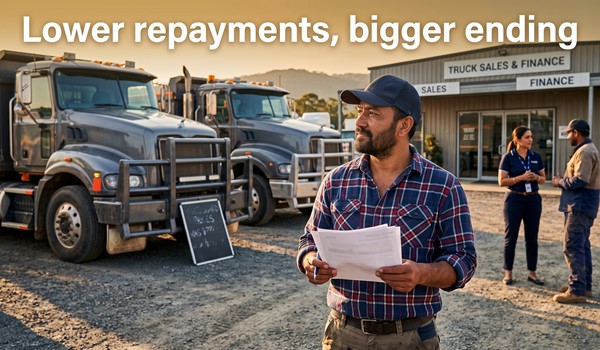
- Balloon payments: A balloon lowers your monthly repayment but increases total interest, since you pay interest on the deferred lump sum across the term.
Watch the fees, not just the headline rate. A sharp advertised rate can hide steep early-termination fees or a large balloon, which a broker comparing the panel can flag before you commit.
A realistic scenario
Picture an owner-driver landing a new linehaul contract that needs a used prime mover priced at $150,000. The contract pays well, but the truck has to be on the road within days, and paying cash would wipe out the cash buffer needed for fuel and the first few weeks of operating costs.
A chattel mortgage over five years funds the truck, with ownership and the GST claim from settlement. The driver structures monthly repayments to match the contract's billing cycle and uses a modest deposit to trim the rate. The truck starts earning immediately, the repayment is matched to the income it produces, and the working capital stays intact for the costs that fall due before the first invoices clear.
Is truck finance the right choice?
Truck finance suits most operators, but the right structure depends on your situation. Use this to sense-check yours:
- The truck generates income: A clear commercial purpose and revenue link make the finance straightforward for lenders to assess.
- You want ownership and tax benefits: If claiming GST, depreciation and interest matters, a chattel mortgage is usually the strongest fit.
- You can match term to replacement cycle: Aim to have the truck paid off before major component replacements like an engine rebuild fall due.
- You have weighed cost against speed: If you can supply full financials you will price lower; if you need to move fast, a low-doc option may be worth the premium.
What matters most
Truck finance lets you put a revenue-earning asset to work without draining the cash your operation runs on. The decisions that shape the outcome are choosing the structure that fits your tax position, matching the term to the truck's replacement cycle, and weighing the genuine cost (rate, fees and any balloon) against how fast you need to be on the road. Comparing across specialist lenders rather than taking the dealer's first offer is usually where the savings sit.
Would you like to learn more or get a free quote on truck finance solutions? Click here.
Frequently asked questions
Can I finance a used truck?
Yes, used trucks are commonly financed, with most lenders covering vehicles up to around 15 years old at the end of the term. A 10-year-old truck can typically get a 5-year term, often at a slightly higher rate due to age.
What are truck finance rates in 2026?
Fixed rates generally start from around 7.49% p.a. and rise toward 15% p.a. depending on your profile and the asset. Your personalised rate will usually differ from a lender's lowest advertised figure.
Can I get finance as a sole trader or with an ABN only?
Yes, finance is commonly available to ABN holders, including sole traders and newer operators. Lenders may assess using bank statements, BAS or an accountant's declaration rather than full financials.
Should I include a balloon payment?
A balloon lowers your regular repayments but increases the total interest paid, and leaves a lump sum to settle or refinance at the end. It suits operators prioritising monthly cash flow over total cost.
Can I finance a prime mover and trailer together?
Yes, they can be financed as a single combination or as two separate assets. Many operators upgrade trailers independently of the truck to expand capacity without replacing the prime mover.