


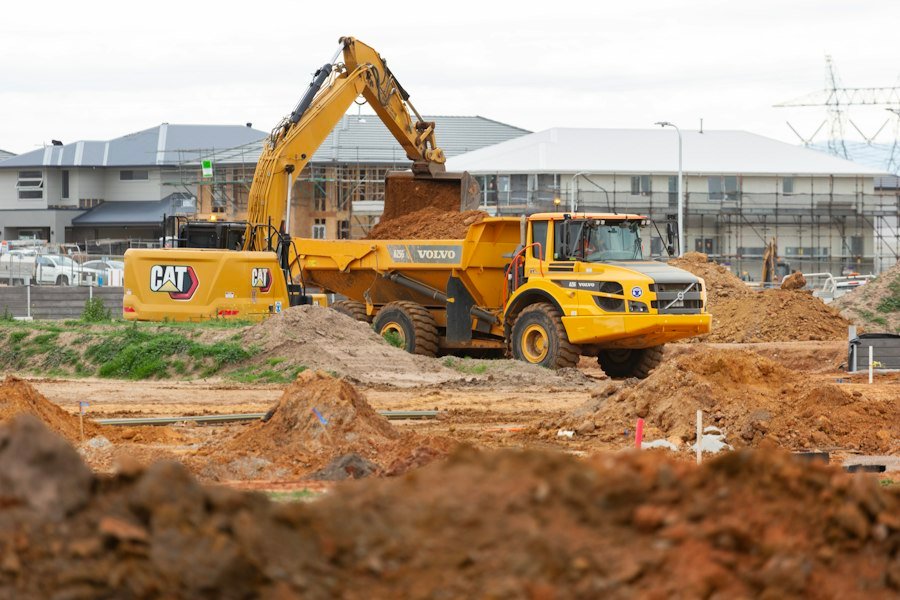
A truck driver in a hi-vis shirt smiling behind the wheelA yellow backhoe loader working a paddock site in Clyde North, VictoriaA farmer in a wide-brimmed hat checking grapevines in a vineyardA yellow excavator loading an articulated dump truck on a housing estate site in Clyde North, Victoria

Chattel mortgage vs lease and hire purchase

Own it from day one. A broker compares 60+ lenders and calls you with options.

Get a finance quote
Free, with no impact on your credit score
Confidential · Expert advice · No obligation
Pre-approval in as little as 24 hoursonce your application is complete
Rated 5.0 on from 102 reviews
No paperwork to startyour broker handles the entire deal, through to settlement
Trusted by 2m+ buyersevery year across our marketplaces

What our clients say on Google

  • Wes T.Aug 2026

    Chris from EasyAsset made my life so much easier when the banks didn’t. He managed to secure me a great deal on the Hilux I purchased and made the whole finance process simple and stress-free.

  • Ali R.Aug 2026

    Chris handled everything, finding the finance, explaining everything clearly, keeping me updated, organising the paperwork and dealing directly with the dealership. All I really had to do was take a few phone calls and sign the documents online.

  • Stuart W.Sep 2026

    Chris was great to deal with, good communication, far less complicated than some of the other finance providers and much quicker.

  • Guru D.Jul 2026

    Chris provided outstanding service throughout the entire loan process. He was professional, knowledgeable, and always took the time to explain everything clearly.

A chattel mortgage is a business loan to buy an asset such as a truck, ute, machine or piece of equipment. You own the asset from day one, and the lender holds a mortgage over it until the loan is paid off. “Chattel” is simply an old legal word for movable property. It’s the structure we settle most often, and your broker compares 60+ lenders to find the one that fits.

How a chattel mortgage works

It’s simpler than the name suggests. Here’s the whole thing, from the invoice to the day it’s paid off.

01
You pick the asset
A dealer or private seller gives you a price and an invoice in your business’s name.
02
The lender pays the seller
At settlement the lender pays for the asset, and you take ownership straight away.
03
The lender takes security over it
The lender registers its mortgage on the Personal Property Securities Register. You use the asset as normal, but the loan has to be paid out before or at the sale, so the lender can remove its registration.
04
You make repayments
They’re usually fixed, over a term you choose. You can also choose a balloon, which lowers the repayments and leaves a lump sum for the end.
05
You finish paying
After the last repayment and any balloon, the lender releases its mortgage and the asset is yours, free and clear.

Chattel mortgage vs lease, hire purchase and novated lease

This is the question most people come here with. The main difference is who owns the asset, and that drives the rest.

Chattel mortgageFinance leaseCommercial hire purchaseNovated lease
Who it’s forBusinesses and sole tradersBusinesses and sole tradersBusinesses and sole tradersEmployees, through their employer
Who owns it during the termYou doThe lenderThe lender, until the final paymentThe lender
GST on the priceMay be claimable on your next BASPaid across the lease paymentsMay be claimable on your next BASHandled through the salary package
What you may be able to claimInterest and depreciationThe lease paymentsInterest and depreciationPaid from pre-tax salary, not a business claim
At the end of the termPay any balloon, and it’s yoursPay the residual, refinance or hand it backMake the final payment, and it’s yoursPay the residual, refinance or hand it back
Usually suitsKeeping the assetUpgrading regularlyOwning it at the end, not from day oneAn employee’s car or ute

Want more detail? Read our guide to chattel mortgage, lease and hire purchase, or the one on novated leases.

When it fits, and when it doesn’t

A chattel mortgage is the common choice for a reason, but it isn’t always the right one.

It usually fits when
You want to own the assetYou plan to keep it for most of its working life, so ownership from day one makes sense.
You’re registered for GSTYou may be able to claim the GST in the price on your next BAS, instead of spreading it across the term.
It’s mainly for businessLenders want the asset used mainly for business, and that’s also what your tax position relies on.
It may not fit when
You upgrade every few yearsA finance lease can make it easier to hand the asset back and move to a newer one.
You’re an employee, not a businessA novated lease or a personal loan is likely to be the better match.
You’re not registered for GSTYou can’t claim the GST in the price, so ask your accountant if another structure suits you better.

GST and tax on a chattel mortgage

These are general points, not tax advice. How they apply depends on your business and your accounting method.

Can you claim the GST?

If you’re registered for GST, you may be able to claim the GST in the purchase price on your next BAS, rather than over the term.

Interest and depreciation

Because your business owns the asset, you may be able to claim depreciation, plus the interest in each repayment.

The instant asset write-off

Some smaller businesses may be able to use it on an asset they own. Its limits and dates change, so it may only help on lower-priced assets.

Written in November 2026. Tax rules change, so ask your accountant what applies to you.

Do you need a balloon?

You don’t have to have one. It’s a trade-off between lower repayments now and a lump sum later.

What it is

A lump sum you agree to pay at the end of the term. The whole loan still gets repaid, but part of it is held back until the end.

Why people choose one

It lowers the regular repayments, which can help while a new truck or machine is starting to earn.

What it costs

The balance stays higher for longer, so you pay more interest overall. Compare the total cost with and without one.

When it falls due

You can pay it, sell or trade the asset to clear it, or refinance it. Plan for it early, not in the last month.

What a chattel mortgage looks like in practice

The first of these is a real EasyAsset deal. The other two are common starting points.

Soil clearing and pest control business
A late-model tractor and loader
SellerPrivate sale
PaperworkLess than the bank asked for
The bank wanted two full years of profit and loss statements. Our lender looked at the business and the asset, and that was enough. Read the story.
Owner-driver replacing a truck
A used prime mover
SellerDealer
BalloonYes
The balloon keeps repayments lower while the truck pays its way, with a plan to refinance or trade it at the end of the term.
Tradie buying a work ute
A ute with a tray and canopy
SellerDealer
BalloonNo
The tray and canopy go on the same loan, and the ute is paid off in full by the end of the term.

Chattel mortgage calculator

Estimate my repayment

Adjust the sliders to estimate your repayments. Speak with our team for an exact quote based on your profile.

Loan amount $150,000
Loan term 5 years
Interest rate 7.5% p.a.
Repayment frequency
Estimated repayment
$3,006
per month
Loan amount$150,000
Total interest$30,342
Total repayable$180,342
Number of repayments60
Get an exact quote →
Indicative only. Actual repayments vary based on lender, credit profile, and fees.

What can you buy with a chattel mortgage?

Most assets a business can move, value and resell, new or used.

Buying premises? That’s a different kind of loan, so see commercial property finance.

Who can get a chattel mortgage?

Lenders look at the asset as much as the business. Requirements vary, so these are the usual starting points.

Mainly business use
It’s business finance, so lenders want the asset used mainly for business. If it’s mostly personal, a different loan will fit better.
An active ABN
Sole traders, partnerships, companies and trusts can all apply.
The right paperwork for the deal
Larger deals can need full financials. Low doc lenders usually skip BAS and bank statements and look at your ABN, credit file, property and deposit.
The asset itself
Its age, condition and resale value all count, and they decide which lenders will look at it.
Credit history
Past credit problems don’t rule you out with every lender, but they do narrow the field. Tell your broker early.
Trading history
A longer history opens up more lenders. Some will consider newer businesses, depending on your situation.

How to get one through EasyAsset

1

Tell us about the asset

What it is, who’s selling it and when you need it. No documents at this stage.

2

Your broker runs the numbers

A named broker calls, talks through the term and any balloon, and works out which lenders fit.

3

You choose an offer

We compare 60+ lenders on total cost, including every fee. Pre-approval can take as little as 24 hours once your application is complete.

4

You own it

Your broker handles the paperwork, the lender pays the seller at settlement, and the asset is yours from that day.


Who you’ll talk to

Chris DebboLead Finance Broker, credit representative 535242Finalist, Broker of the Year, 2026 LMG Commercial & Asset Finance Awards
Ayman ZiadBusiness Development, credit representative 577946
Arrick AngSupport Broker

Chattel mortgage FAQ

What is a chattel mortgage?+
It’s a business loan to buy an asset such as a truck, machine or piece of equipment. Your business owns the asset from day one, and the lender holds a mortgage over it until the loan is paid off.
What’s the difference between a chattel mortgage and a lease?+
With a chattel mortgage you own the asset from day one and may be able to claim interest and depreciation. With a finance lease the lender owns it, you may be able to claim the lease payments, and at the end you pay the residual, refinance or hand it back. If you want to keep the asset, a chattel mortgage usually fits better. If you upgrade often, a lease may suit you.
What’s the difference between a chattel mortgage and hire purchase?+
Under commercial hire purchase the lender owns the asset until your final payment, and then ownership passes to you. Under a chattel mortgage you own it from the start. Repayments and tax treatment can look similar, so the choice often comes down to the offers on the table and what your accountant prefers.
What’s the difference between a chattel mortgage and a novated lease?+
A novated lease is for employees. Your employer pays the lease from your salary before tax, and it usually covers a car or ute. A chattel mortgage is a loan in your business’s name, for an asset your business uses.
Can I claim GST on a chattel mortgage?+
If your business is registered for GST and buys under a chattel mortgage, you may be able to claim the GST in the purchase price on your next BAS. How and when depends on your accounting method, so check with your accountant.
Can I use the instant asset write-off with a chattel mortgage?+
Possibly. Because you own the asset, it can sit alongside the write-off if your business qualifies. The write-off is for smaller businesses and its limits change, so check the current rules with your accountant.
What are chattel mortgage rates?+
Rates depend on the asset, its age, the term, any balloon and your business. The calculator gives you an estimate, and your broker gets real offers to compare on total cost, including every fee.
Do I need a deposit for a chattel mortgage?+
Not always. It depends on the lender, the asset’s age and your business’s history. Your broker tells you what each lender asks for.
Can I refinance a chattel mortgage?+
Often, yes. People usually look at it when a balloon is due or when they want to lower their repayments. Check for early payout fees first, then ask your broker to compare.
Is EasyAsset a lender?+
No. EasyAsset is a broker. We take your application to our lender panel and show you the offers side by side.

Get your chattel mortgage quote today

Talking to us won’t affect your credit score.

Get my free quote
Get my free quote
Talking to us won’t affect your credit score.